













You typed your own business into ChatGPT, asked it to recommend a company like yours, and got back a list of competitors. Or worse, you got nothing. That stings, and it matters more every month, because your customers are asking AI assistants the same questions they used to type into Google. AI tools like ChatGPT have become a mainstream way people research products and services, and more buyers now ask them for recommendations instead of scrolling through search results.
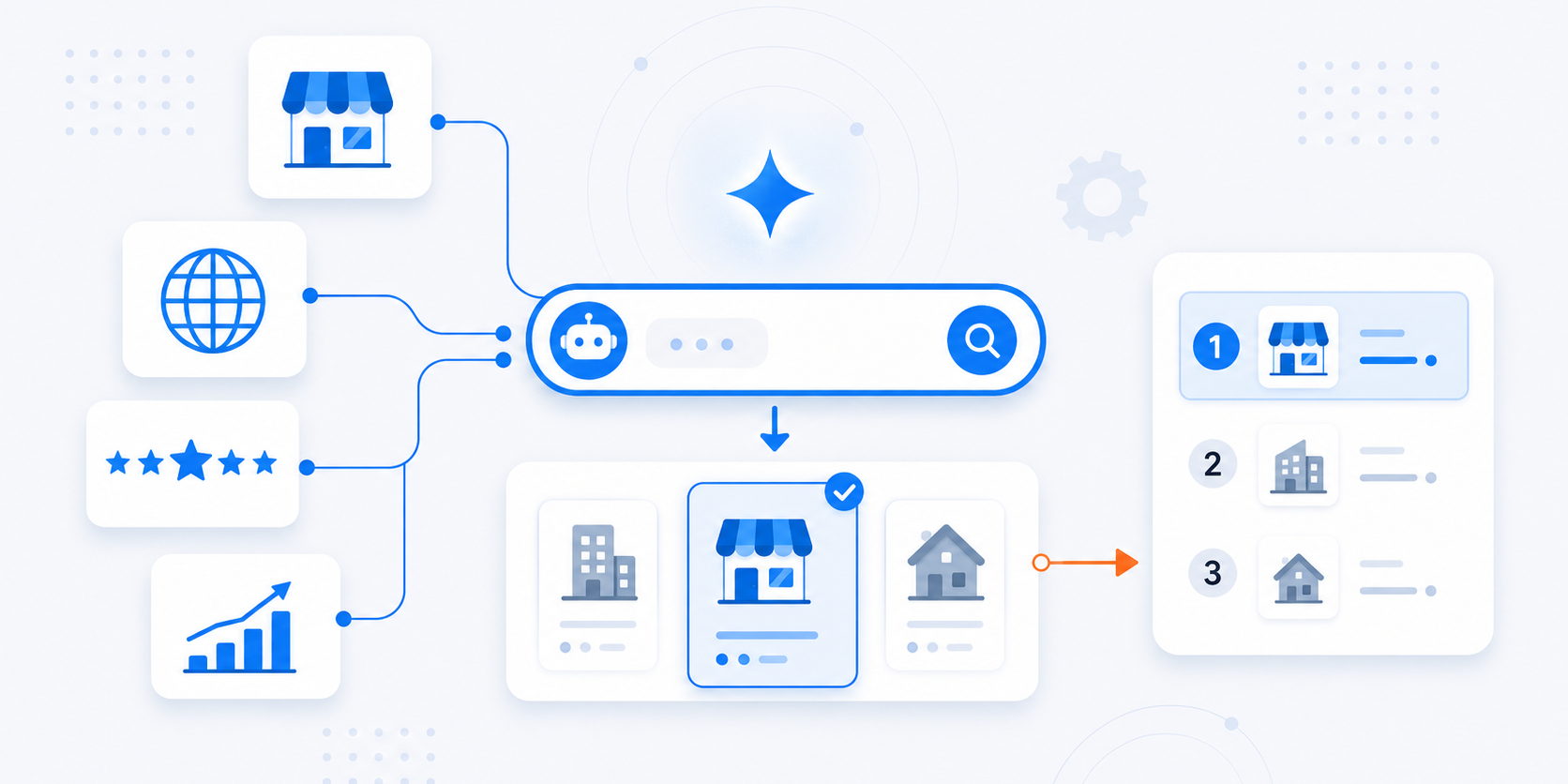
Here is the short version: a business shows up in ChatGPT when the AI can find clear, consistent information about it and confirm that information across sources it already trusts. It is not about who pays. It is about what the machine can read and verify. That is the whole game.
At Running Robots, we help Iowa businesses get found, and “found” now includes AI assistants like ChatGPT, Gemini, and Perplexity. The rules are different from classic search, but they are learnable, and most of the work is more straightforward than business owners expect.
Why doesn’t my business show up in ChatGPT?
Your business does not show up because the AI cannot confidently connect the dots between who you are, what you do, and where you do it. When it is unsure, it leaves you out and recommends a business it can describe with confidence.
Four gaps cause this most often:
- The AI can’t find clear information about you. If your website does not plainly state what you do, who you serve, and where, the AI has nothing solid to repeat.
- You’re missing from the sources AI trusts. Assistants lean heavily on third-party sites like industry directories, review platforms, and local business organizations. If you are not listed there, you are invisible to the part of the web the AI reads most.
- Your site isn’t built for machines to read. Pretty design is not the same as readable structure. Missing headings, vague pages, and no schema markup make your site hard for an AI to parse.
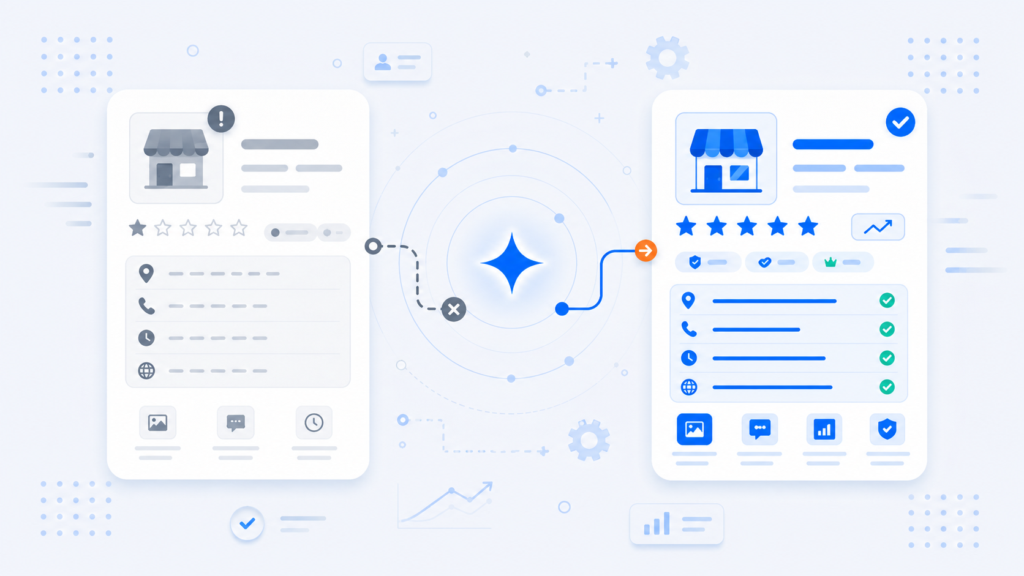
- Your brand signals are weak. Inconsistent business names, addresses, and phone numbers across the web tell the AI it might be looking at two different companies. Doubt gets you excluded.
Notice what is not on that list: paying anyone. You cannot buy your way into a ChatGPT recommendation, which is good news, because it means the playing field rewards work over budget.
What we found when we tested this for Iowa
We do not guess at how this works. We run the actual questions Iowa buyers ask, like “best agency in my city” or “who does this service near me,” through ChatGPT, Gemini, Perplexity, and Google’s AI results, then look at exactly which businesses get named and which sources the AI used to decide.
One pattern showed up over and over. The businesses the AI recommended were almost always pulled from the same short list of source types: a major industry directory, a review platform, and a local business organization’s website. In other words, the AI rarely invents a recommendation from a company’s own site alone. It repeats the businesses that independent, trusted sources already vouch for.
That single finding reframes the whole problem. Showing up in ChatGPT is less about shouting louder on your own website and more about getting your business cited on the handful of outside sources the AI checks. The businesses that win are not always the biggest or the best. They are the ones the AI can describe in a sentence and back up with a source it trusts.
How ChatGPT actually decides who to recommend
Think of ChatGPT as a very well-read assistant who answers from two places: what it learned during training, and what it can look up live on the web when it answers your question.
For a question like “best marketing agency in Iowa City,” the assistant assembles an answer from what it can find and corroborate right then. It favors businesses that appear clearly across multiple trustworthy pages. A company listed on a respected directory, backed by visible reviews, with a website that plainly states its services, is easy to recommend. A company that exists only as a thin homepage is easy to skip.
This is why two businesses of similar quality can get wildly different AI results. The one that is easier to read and verify wins. Structure and corroboration beat reputation alone.
It also means classic SEO and AI visibility are related but not identical. Ranking on page one of Google helps, but getting cited by an AI assistant depends more on clear answers, structured information, and agreement across the web. You can do well at one and poorly at the other, which is exactly the trap many Iowa businesses are in right now. For the deeper playbook on this, see our guide on how to get cited by Google AI Overviews and ChatGPT.
How to get your business to show up in ChatGPT
You get found by making your business easy to read and easy to verify. Here is the sequence we use, in priority order.
- Make your website machine-readable. Every core page should state plainly who you are, what you do, and the areas you serve. Add schema markup so the structure is explicit, not implied. Our website design and SEO teams handle this together, because design and structure have to work as one.
- Get listed where AI looks. Claim and complete your profiles on the platforms assistants pull from: your Google Business Profile, the directories specific to your industry, and local organizations like your chamber of commerce. Consistency across these listings is what turns the AI’s doubt into confidence.
- Build a steady stream of reviews. Assistants notice review counts and quote them. A visible, growing set of genuine reviews on platforms like Google is one of the strongest trust signals you can send.
- Publish content that answers real questions. Clear, well-structured articles that directly answer what your customers ask give AI assistants something specific to cite. Our content creation approach is built around answer-first writing for exactly this reason.
- Strengthen your brand signals. Use the same business name, address, and phone number everywhere. Keep your LinkedIn and social profiles current. These small consistencies add up to a clear identity the AI can trust.
- Measure it, then adjust. Ask the AI assistants the questions your customers ask, and track whether you appear and which sources the answer cites. What gets measured gets fixed.
None of these steps require a bigger budget than your competitors. They reward the business that does the unglamorous work first, which is why a small Iowa company can absolutely beat a larger one here.
Get found where your customers are searching
Your customers are already asking AI assistants who to hire. If your business is not in the answer, you are handing those leads to whoever is. The fix is real work, but it is work any committed business can do, and it pays off across every search tool at once. Expect steady progress rather than an overnight switch: website and listing fixes can register within a few weeks, while reviews and brand signals compound over several months.
Running Robots helps Iowa businesses get found in classic search and in AI assistants, with the website structure, content, and local presence that make you easy to recommend. Want to know where you stand today? Book a Free Consultation with our team and we will show you what the AI assistants say about your business right now.
Questions or want to talk it through? Reach us at hello@runningrobots.com or (319) 359-3350.