













You’re running a business in Iowa City. You know you need to “do digital marketing,” but every time you start researching, you get buried in jargon, generic advice, and agencies telling you to spend more money. None of it feels specific to your situation.
Digital marketing in Iowa City is the process of using online channels like search engines, websites, paid ads, social media, and email to attract and convert local customers. But here’s what most guides won’t tell you: what works in Iowa City doesn’t look like what works in Chicago, Des Moines, or even Cedar Rapids. This market has its own dynamics, and understanding them is the difference between burning budget and building pipeline.
This guide breaks down what actually drives results here. No fluff, no upsell, just the playbook.
Why Iowa City Is a Different Digital Market
Most digital marketing advice is written for businesses in large metro areas with massive search volume and national audiences. Iowa City doesn’t work that way.
The local economy runs on a few distinct engines. The University of Iowa drives a large portion of the population and spending patterns, but that audience is seasonal and transient. The healthcare corridor employs thousands and creates a B2B ecosystem that many outside the area overlook. Then there is the manufacturing and industrial base toward Cedar Rapids, where businesses sell to other businesses and sales cycles can stretch for months.
Each of these audiences searches differently, buys differently, and responds to different messaging. Treating Iowa City as one single audience leads to underperformance.
Competition is also tighter than people expect. Most “service Iowa City” searches are crowded. Ranking requires more than just having a website. It requires strong content, technical structure, and a clear reason for Google to rank you above others.
The Five Channels That Drive Results Here
Not every digital marketing channel matters equally in Iowa City. These are the ones that consistently drive revenue.
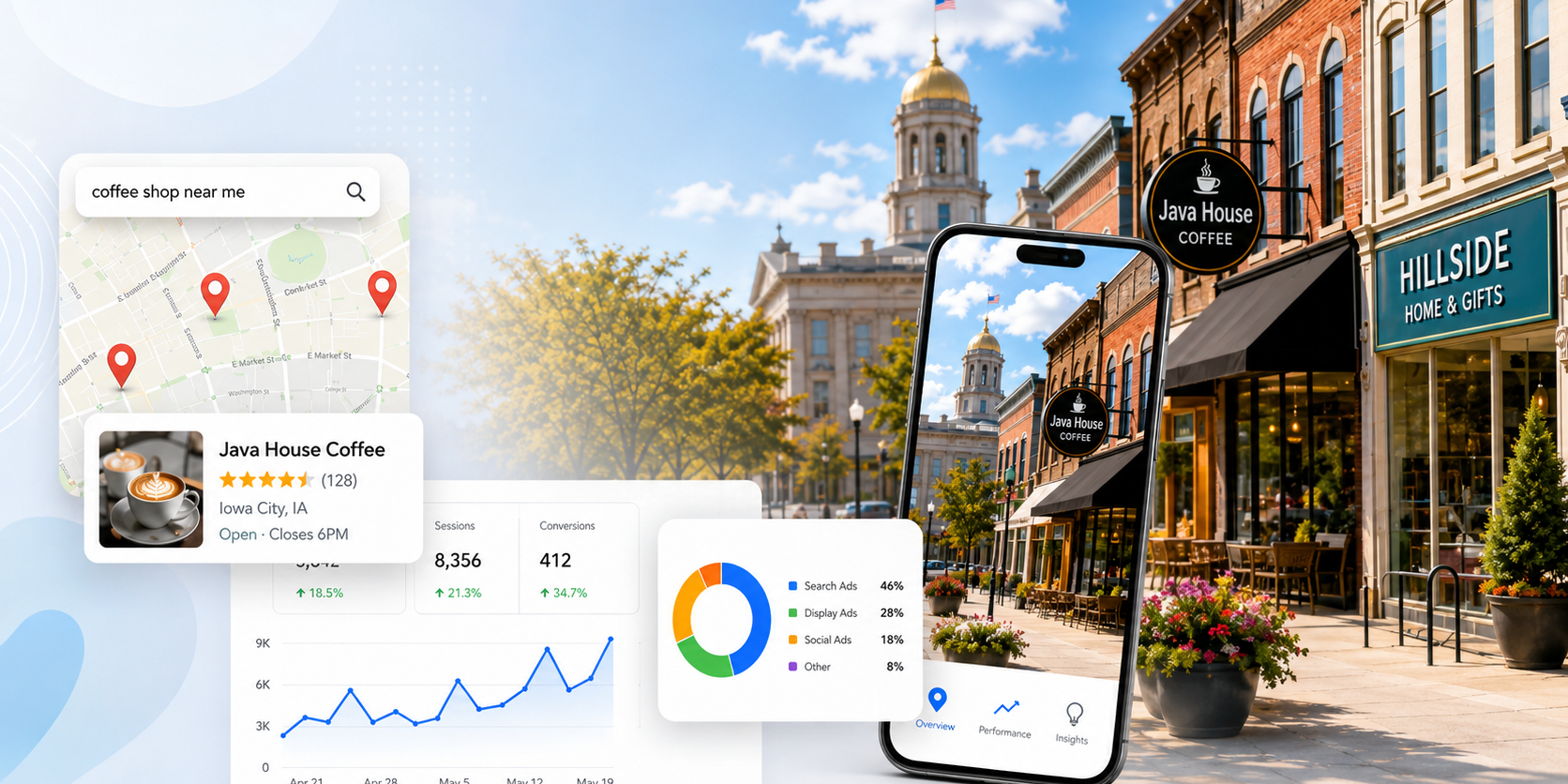
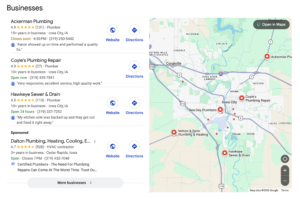
Local SEO and Google Business Profile. This is the highest ROI channel for most local businesses. When someone searches for a service in Iowa City, Google shows a map pack first. If your profile is not optimized with accurate categories, complete information, regular updates, and reviews, you are invisible. Your website also needs location pages, schema markup, and consistent business information across directories.
A website built for conversion. Many businesses have websites that look fine but do not convert. No clear call to action, no lead capture, and no direction. Your website should function as a salesperson. That means strong messaging above the fold, visible contact options, fast load times, and a mobile experience that actually works. Running Robots builds websites on WordPress specifically because it gives businesses the flexibility to grow without hitting a platform ceiling.
Pay Per Click advertising. SEO takes time. PPC (Pay Per Click) advertising provides immediate visibility. The key is targeting intent-driven keywords. Broad terms waste budget. Specific searches tied to services attract people ready to act. Well-managed campaigns consistently outperform poorly targeted ones, even at the same spend level.
Content that answers real questions. Content should exist to answer what your customers are already searching. It needs to be specific and useful. Generic content does not perform. Every piece should either rank for a keyword or support a page that does. Running Robots builds content strategies around this principle.
Email marketing and automation. Most visitors do not convert on the first visit. Email and automation allow you to stay in front of them until they are ready. Simple follow-up sequences can recover leads that would otherwise disappear.
What Most Iowa City Businesses Get Wrong
Chasing national keywords. Local businesses should focus on local intent searches. National keywords are competitive and often bring unqualified traffic. Local searches convert.
Running ads without a landing page. Sending paid traffic to a homepage instead of a targeted landing page kills conversion rates. Every ad should match a specific page built for that intent.
Treating the website like a brochure. A website should generate leads, not just provide information. It needs calls to action and a way to capture contact information.
No follow-up system. Delayed responses cost business. Leads need immediate response or automated follow-up to stay engaged.
How to Tell If Your Digital Marketing Is Working
Qualified leads. Focus on actual inquiries, not just traffic numbers.
Cost per lead. Divide total spend by number of qualified leads. This determines efficiency.
Lead sources. Know where leads are coming from.
Google Business Profile activity. Track views, calls, and actions.
Trends over time. Look at performance over months, not days.
When to Handle It Yourself vs. Bring in Help
What you can handle. Updating your Google profile, responding to reviews, posting on social media, and writing occasional content.
Where experts matter. Technical SEO, paid ads management, website development, and strategy.
Most businesses benefit from a hybrid approach. If you are looking for an experienced digital marketing agency in iowa, Running Robots offers a free consultation to help you identify what actually makes sense for your business and your budget.